
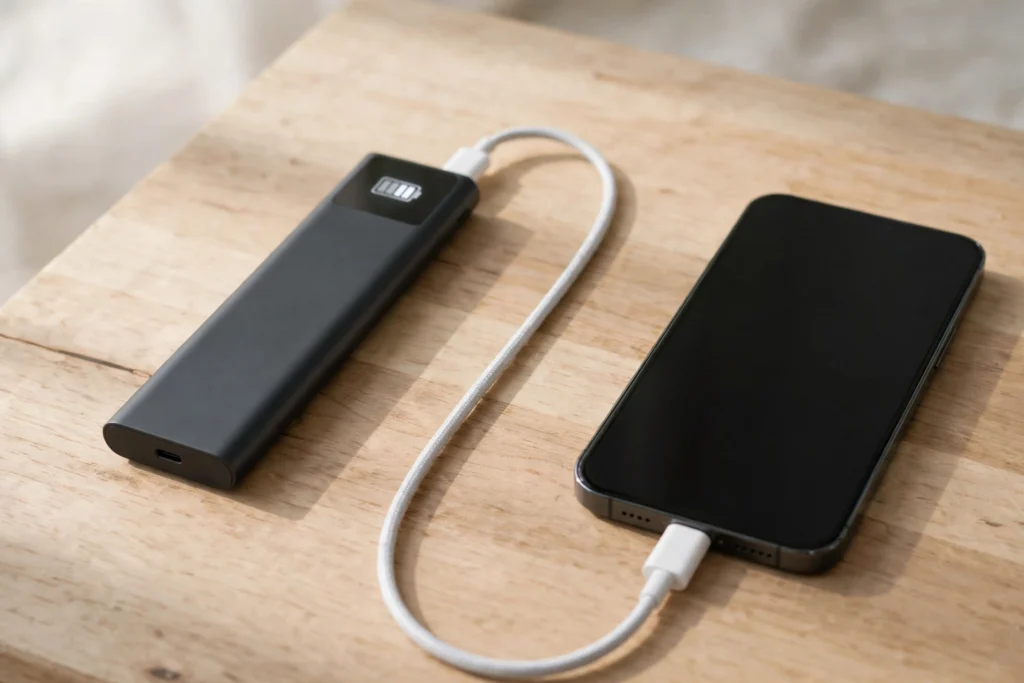

A dead phone at the wrong moment is a modern nightmare: no maps, no tickets, no way to call anyone. A good portable charger fixes that for years, and the best portable chargers in 2026 are smaller, faster, and far more capable than the bricks of a few years ago. The right one charges your phone twice over, fits in a jacket pocket, and can even top up a laptop.
This list covers every need. There is a pocket-sized 10,000mAh charger for daily carry, a slim MagSafe charger for iPhones, a rugged pick for hiking, and two high-capacity chargers that can power a laptop on a long flight. Every pick was chosen for real capacity — the power you actually get out of it — not just the number printed on the box.
One thing to know before you buy: a power bank never delivers its full labelled capacity. Conversion losses mean a 10,000mAh bank gives your phone roughly 6,500 to 7,000mAh of usable charge, which is still enough for one to two full phone charges. The numbers below use that honest maths.
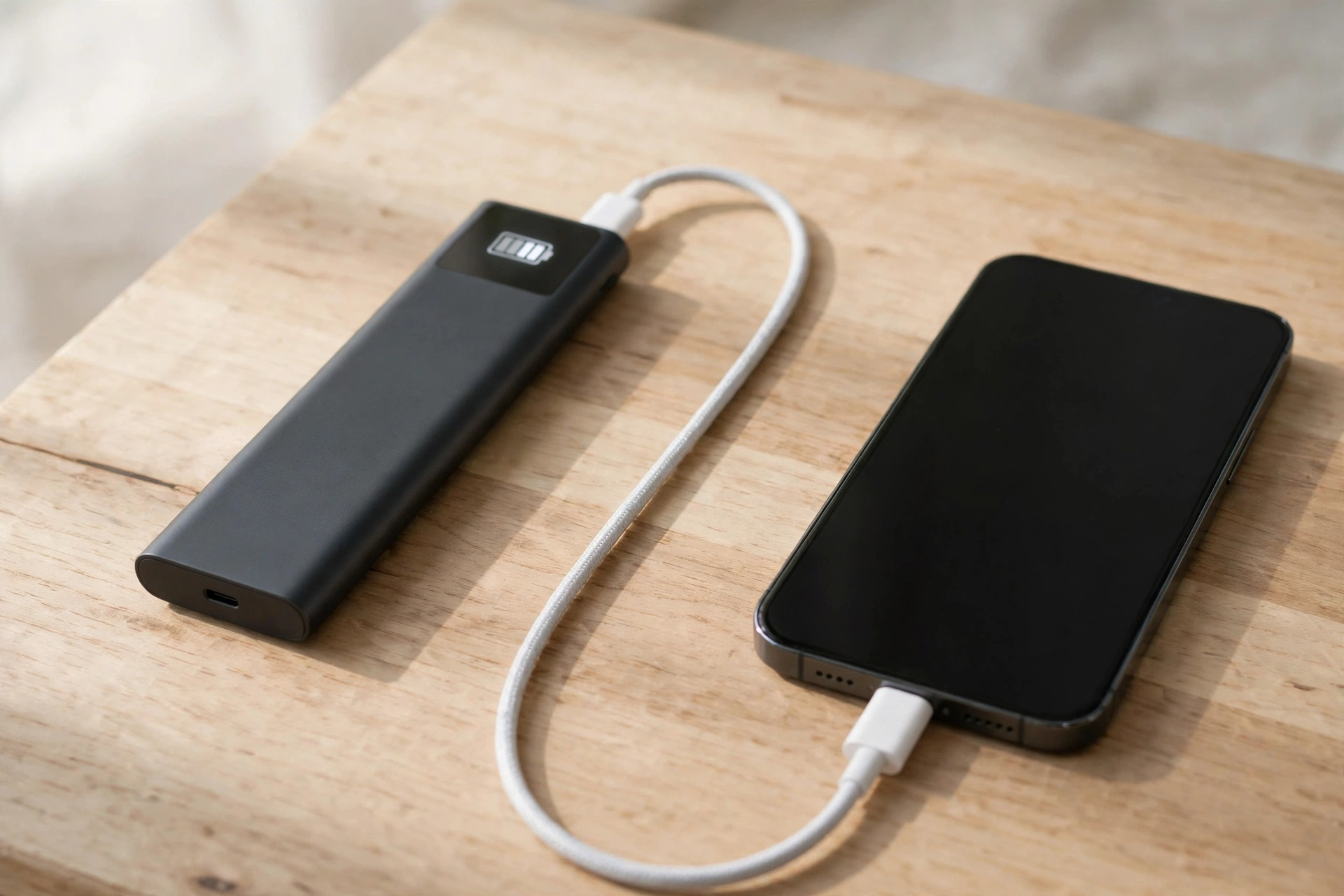
1. Anker 737 Power Bank (PowerCore 24K)
The Anker 737 is the power bank for people who charge everything. With a 24,000mAh capacity and a 140W output, it can charge a laptop, a phone, and a pair of earbuds at the same time, and it does it fast — a MacBook Pro can gain half a charge in about half an hour. A small smart display shows exactly how much power is flowing to each device and how long the bank itself will take to refill.
It is not small. At around 630 grams it belongs in a bag rather than a pocket, but for travel, work trips, and long days away from a socket it is the most capable charger on this list. It recharges itself in about an hour with a powerful enough charger, which is remarkable for its size. If you carry a laptop and a phone and you hate hunting for sockets, the 737 is the one to buy. One caution: some airlines cap power banks at 100Wh, and this one sits just under that limit, so it is fine to fly with — but check your airline’s rules before you travel.
2. Nitecore NB10000 Gen 3
The Nitecore NB10000 Gen 3 is the power bank for people who count grams. It weighs around 150 grams — lighter than most phones — yet packs a genuine 10,000mAh capacity and a 20W USB-C output that charges a modern phone quickly. Hikers, runners, and minimalists love it because it disappears into a pocket or a running vest.
The carbon-fibre-style shell is tough and shrugs off scratches, and the low-current mode charges small gadgets like earbuds and smartwatches without the bank shutting itself off. It has one USB-C port and one USB-A port, which is enough for most people. The trade-off is speed: 20W is fine for a phone but slow for a tablet or a laptop, and there is no wireless charging. If your priority is the lightest possible charger that still does the job, nothing else on this list comes close.
3. Anker MagGo 10,000mAh (MagSafe)
The Anker MagGo is the neatest way to charge an iPhone on the move. It snaps onto the back of a MagSafe iPhone with magnets, charges wirelessly at up to 15W, and doubles as a kickstand for watching videos on a train or a plane. No cables, no fumbling — it just sticks and works.
The 10,000mAh capacity gives an iPhone about one and a half full charges, and a USB-C port lets you charge a second device with a cable at the same time. A small display shows the remaining battery, which is a welcome touch. It is thicker than a plain battery pack because of the magnets and the stand, and it only makes sense for iPhones with MagSafe — Android users should look at the Nitecore or the Anker 737 instead. For iPhone owners who want the tidiest possible charging, this is the pick.
4. Baseus Blade 2
The Baseus Blade 2 is a 12,000mAh power bank shaped like a slim laptop accessory rather than a brick. It is thin enough to slide into a laptop sleeve, and its 65W USB-C output charges a laptop, a tablet, or a phone quickly. A small digital display shows the remaining charge and the power going to each device.
It has two USB-C ports and one USB-A port, so it can charge three devices at once, and it recharges itself quickly. The slim shape is the real selling point: it fits where chunky power banks do not, like the document pocket of a bag or a jacket’s inside pocket. The capacity is a little lower than the Anker 737, so it will not charge a laptop fully — expect about half a laptop charge plus a phone. For commuters and students who carry a laptop every day, the Blade 2 is the most elegant option here.
5. Goal Zero Sherpa 100AC
The Goal Zero Sherpa 100AC is the power bank for people who go far from sockets. With a 25,600mAh capacity, a 100W USB-C output, and a built-in AC outlet, it can charge a laptop, run a small lamp, or power a camera battery charger in the field. It is a favourite with photographers, campers, and field workers who need real power outdoors.
It is heavy — over 900 grams — and it costs more than the others on this list, but it does jobs no other power bank here can do. The AC outlet is the key feature: it turns the bank into a portable wall socket for devices that only charge from the mains. It also charges from a solar panel, which makes it a genuine off-grid tool. This is not an everyday carry charger. It is a specialist tool, and if you need it, you already know.
6. Ugreen Nexode 12,000mAh
The Ugreen Nexode is the sensible middle ground: a 12,000mAh bank with a 100W USB-C output, a clear digital display, and a price that undercuts the big names. It charges a phone, a tablet, and a laptop, and it does it fast enough that you will rarely wait long. The display shows the remaining battery as a percentage and the wattage going out, so you always know where you stand.
It is compact for its capacity, with two USB-C ports and one USB-A port, and it recharges itself at up to 65W, so it is ready to go again quickly. The build is solid plastic rather than premium metal, and it lacks the wireless charging of the MagGo, but for the money it is one of the best-value high-power banks you can buy. If you want laptop charging without the Anker 737’s price or weight, start here.
7. Charmast 10,000mAh Slim
The Charmast slim is the budget pick that covers the basics well. It is a 10,000mAh bank with a built-in USB-C cable, so you never forget the cable, plus a USB-C port and a USB-A port for other devices. It charges a phone at up to 20W, which is fast enough for most people, and it costs a fraction of the premium picks.
The built-in cable is the feature that matters most in daily use — it is always there when you need it, and it doubles as the charging cable for the bank itself. The display is simple, showing the remaining charge as a percentage. The plastic build feels basic, and it cannot charge a laptop, but for topping up a phone through the day it does everything you need. Keep one in your bag and one by the door, and you will rarely see a low-battery warning again.
Quick Comparison
| Power bank | Capacity | Max output | Best for |
|---|---|---|---|
| Anker 737 | 24,000mAh | 140W | Laptops, travel |
| Nitecore NB10000 Gen 3 | 10,000mAh | 20W | Ultralight carry |
| Anker MagGo | 10,000mAh | 15W wireless | iPhone, MagSafe |
| Baseus Blade 2 | 12,000mAh | 65W | Slim laptop charging |
| Goal Zero Sherpa 100AC | 25,600mAh | 100W + AC | Outdoors, cameras |
| Ugreen Nexode | 12,000mAh | 100W | Value laptop charging |
| Charmast Slim | 10,000mAh | 20W | Budget daily carry |
How to Choose a Portable Charger
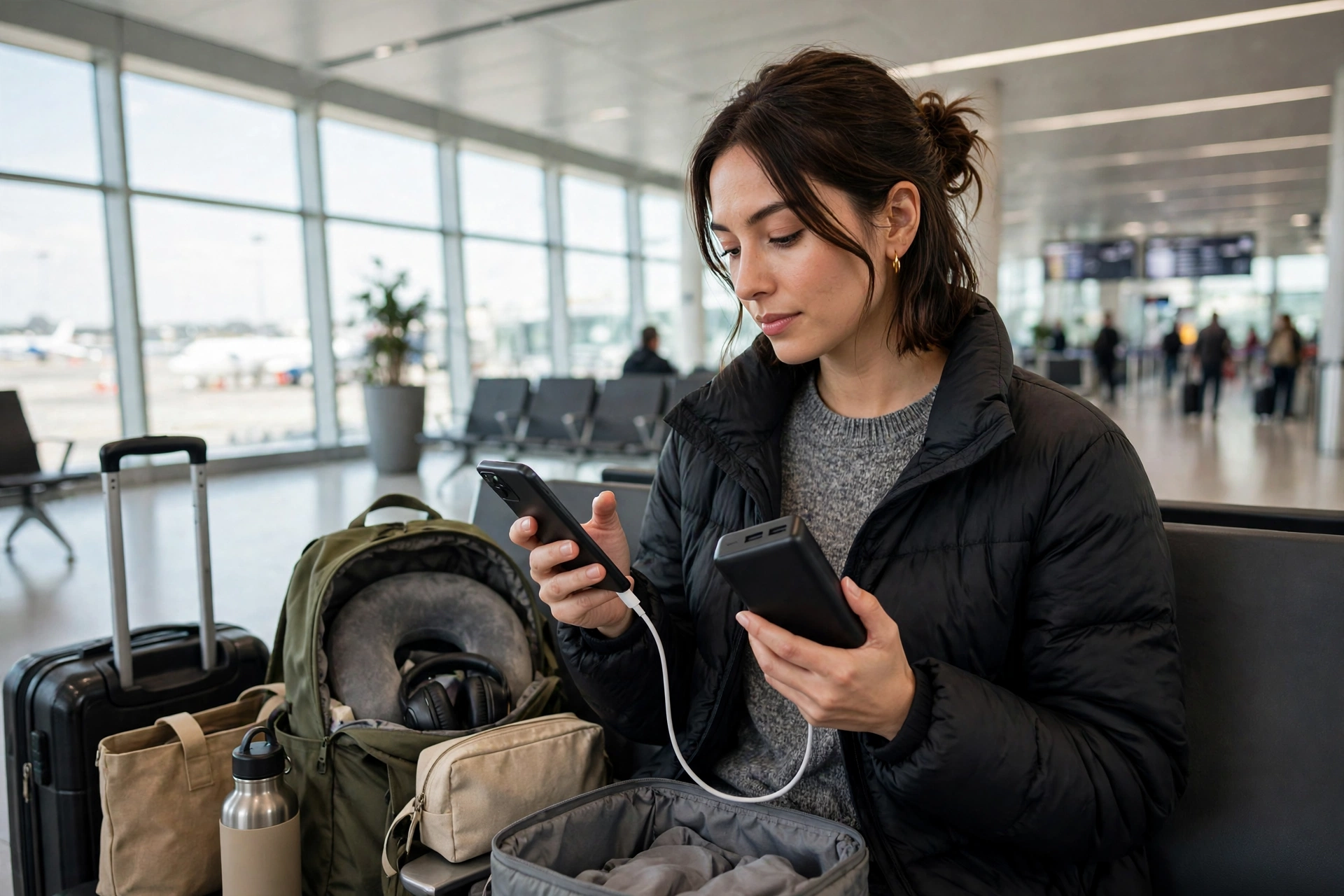
Start with capacity, and be honest about what you charge. A 10,000mAh bank gives a phone one to two full charges and fits in a pocket — enough for most days. A 20,000mAh or larger bank adds a tablet or a partial laptop charge, but it is heavier and belongs in a bag. If you fly often, remember the 100Wh limit most airlines apply to power banks in hand luggage; the big banks on this list sit just under it, but always check before you travel.
Then check the output power. A phone charges happily at 20W, a tablet wants 30W, and a laptop needs 45W or more — the Anker 737, Ugreen Nexode, and Baseus Blade 2 are the ones that can do it. Count your ports too: one USB-C port is fine if you only charge a phone, but two ports plus USB-A means you can charge your phone and your earbuds at the same time. And look for a display or at least a clear battery indicator, so you are never guessing how much charge is left. A bank with a percentage display is far more useful than one with four tiny dots, especially when you are deciding whether it will last the rest of the day. To keep the phone you are charging in top shape, see Best Budget Smartphones (Great Phones That Don’t Cost Much in 2026) and Android Tips and Tricks (20 Useful Things Your Phone Can Do).
How to Make Your Power Bank Last Longer
A power bank is a battery, and batteries wear out with use and heat. The single best habit is to store it half-charged when you are not using it for a while — a bank left at 100 percent in a hot car degrades far faster than one kept at 50 percent in a cool drawer. Charge it up the night before a trip, not weeks ahead, and it will hold more of its capacity over the years.
Use the right cable and charger. A thin, cheap cable can slow charging to a crawl and waste power as heat, while a good USB-C cable rated for the bank’s wattage keeps things fast and cool. Recharge the bank with a proper wall charger rather than a laptop’s USB port, which is often too weak and takes all night. And do not leave the bank plugged in for days after it is full — most modern banks stop charging themselves, but the heat from a cheap charger can still shorten battery life.
Watch for the warning signs that a bank is past its best. If it charges your phone far less than it used to, if it gets hot during normal use, or if the case is swelling even slightly, stop using it and recycle it properly. A swollen lithium battery is a fire risk, and no power bank is worth that. Good banks last two to three years of regular use; when yours fades, replace it with a known brand rather than the cheapest option online, because honest capacity ratings and proper safety circuits are what you are paying for.
Charging Tips for Phones and Laptops on the Go
Charging on the move works best when you plan for it. Plug your phone into the power bank before it drops below 20 percent, because charging from nearly empty is slower and harder on the battery than topping up early. If you are charging two devices at once, give the hungriest one the fastest port — the laptop or tablet gets the high-wattage USB-C port, and the earbuds or watch take the slower one.
Turn on low-power mode while you charge away from a socket. It cuts background activity and the screen brightness, so more of the power bank’s energy goes into the battery instead of fighting the apps running in the background. And if you are on a long flight or a train, charge in short bursts rather than leaving the phone plugged in all day — it keeps the phone cooler and the bank lasts longer. A power bank is at its best as a safety net, not a permanent charger: use it when you need it, recharge it when you are home, and it will be ready the next time your battery icon turns red. Keep a short cable with the bank at all times, because a power bank without a cable is just a paperweight, and the built-in cable models on this list solve that problem neatly.
FAQ
How many times will a 10,000mAh power bank charge my phone?
About one to two times, depending on your phone’s battery size. A 10,000mAh bank delivers roughly 6,500 to 7,000mAh of usable power after conversion losses. A phone with a 4,000mAh battery gets about one and a half charges from it.
Can I take a power bank on a plane?
Yes, in hand luggage — never in checked bags. Most airlines allow power banks up to 100Wh, which covers every bank on this list. Larger banks need airline approval, so check the watt-hour rating printed on the bank and your airline’s rules before you fly.
How long does a power bank take to recharge?
It depends on the bank and the charger you use. A 10,000mAh bank takes about two to three hours with a 20W charger, while a 24,000mAh bank can take four to five hours unless it supports fast input charging. Using a weak old phone charger will make it much slower.
Can a power bank charge a laptop?
Yes, if it supports USB-C Power Delivery at 45W or more. The Anker 737, Ugreen Nexode, and Baseus Blade 2 on this list can charge most laptops. Check your laptop’s charging needs first — some large laptops want 65W or 100W, and a weak bank will charge them slowly or not at all.
Do power banks lose capacity over time?
Yes, slowly. A good power bank keeps most of its capacity for two to three years of regular use, then gradually holds less charge. Storing it half-charged in a cool place, rather than full or empty in a hot car, helps it last longer.
Conclusion
The best portable chargers in 2026 are the ones that match how you travel and what you charge. The Anker 737 is the most capable all-rounder for laptop owners, the Nitecore NB10000 Gen 3 is the lightest honest charger you can carry, the Anker MagGo is the neatest pick for iPhones, and the Charmast slim covers the basics for very little money. Pick the capacity you need, check the output power against your devices, and buy from a known brand — a cheap no-name bank with an inflated capacity number is the one purchase that can genuinely disappoint. For more phone tips, read iPhone Hidden Features (18 Secret Tricks You Should Try).
Sources: Power bank — Wikipedia, Anker 737 Power Bank — official page