
Your email is the key to your digital life. It resets your passwords, holds your receipts and tickets, and confirms your identity to banks, shops, and social networks. If someone gets into it, they can lock you out of everything else — quietly, and often before you notice anything is wrong.
The scary part is that email hacking rarely looks dramatic. There’s no flashing warning and no alarm. Instead, there are small clues: a login from a city you’ve never visited, an email you didn’t send, a password-reset message you never requested. This guide walks through 8 signs your email may be compromised, how to check each one in minutes, and exactly what to do next if the answer is bad news.
Work through the checks in order. Most of them take under a minute each, and together they give you a clear picture of whether your account is safe — or whether it’s time to act fast.
1. Password-Reset Emails You Didn’t Request
A password-reset email arrives for an account you haven’t touched in weeks. You didn’t ask for it, and you didn’t forget your password. Someone else did — they’re trying to reset your password and get in, and the reset email is the proof.
One stray reset email can be a mistake, or a bot testing whether your address is active. Two or more, across different services, in a short space of time, is a pattern worth taking seriously. Don’t click the reset link in the email — it may be genuine, but if you’re unsure, go to the service’s website yourself and check your account directly.
What to do: log into the account from the real website or app, change the password to something long and unique, and turn on two-factor authentication if it isn’t already on. Then check the account’s recent activity for logins you don’t recognise.
2. Emails in Your Sent Folder That You Didn’t Send
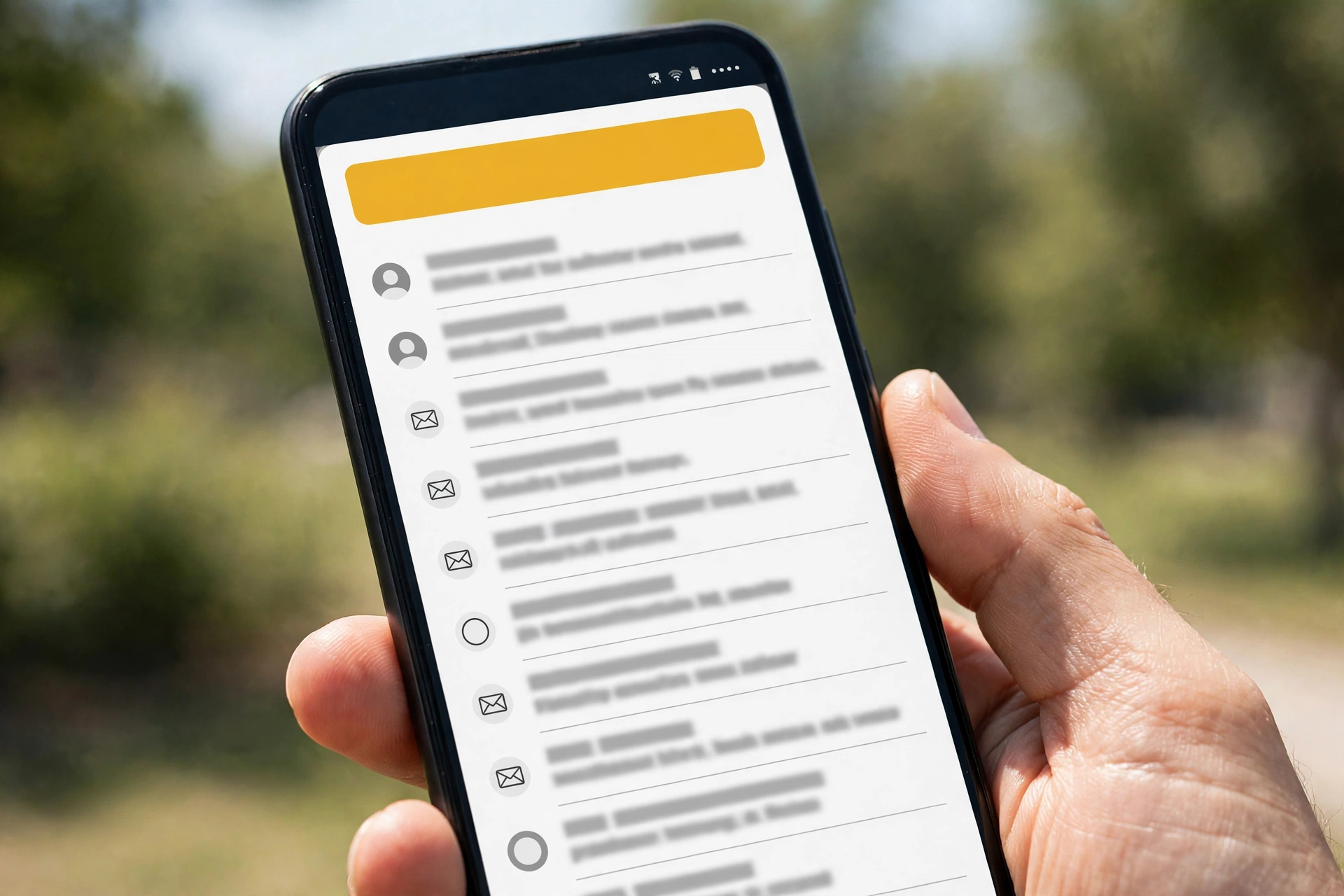
Open your Sent folder and scan it. Do you see messages you don’t remember writing — especially ones with links, attachments, or strange wording, sent to people you know? That’s one of the clearest signs of a hacked email account. Attackers use your address to send spam or phishing to your contacts, because a message from you is far more likely to be opened than one from a stranger.
Check the Trash and Drafts folders too. Hackers sometimes delete the sent messages to hide their tracks, or leave drafts of messages they plan to send later. If your Sent folder is empty when it shouldn’t be, or if messages are missing, that’s a clue as well.
What to do: change your password immediately, warn your contacts not to click links in recent messages from you, and check your account’s login history for unfamiliar devices or locations.
3. Logins from Places You’ve Never Been
Every major email provider keeps a record of recent sign-ins. In Gmail, scroll to the bottom of your inbox and click “Details” under “Last account activity.” In Outlook, go to your account security page and look at recent activity. In Apple Mail, check your Apple ID device list. These pages show when and where your account was accessed, and from which device.
A login from another country at 3 a.m. while you were asleep is a red flag — unless you use a VPN, which can make your location look different. Know your own patterns: if you use a VPN regularly, unfamiliar locations may be normal. If you don’t, they aren’t.
What to do: sign out of all sessions from the security page, remove any device you don’t recognise, and change your password. Then turn on login alerts so your provider emails or texts you about every new sign-in.
4. Your Contacts Get Strange Messages from You
A friend texts you: “Did you send me that weird link?” You didn’t. Attackers who control your email often message your contacts with phishing links or urgent requests for money, because people trust messages from someone they know. The “I’m stuck abroad, send money” scam is the classic version, but modern ones are subtler — a shared document link, a “check out this photo” message, or a fake invoice.
Ask the friend to forward you the message or take a screenshot, so you can see exactly what was sent. Check whether it came from your real address or a lookalike — sometimes the scammer is only impersonating you with a similar address, and your account is fine. If it came from your real account, treat it as a confirmed breach.
What to do: change your password, tell your contacts what happened so they don’t click the links, and check your forwarding rules (sign 6) — the attacker may have set your mail to forward to them as well.
5. Your Password Suddenly Doesn’t Work
You type your password, the one you’ve used for months, and it’s rejected. You try again, carefully, and it fails again. Either you’ve mistyped it — it happens — or someone changed it. If you’re sure of the password, and especially if your recovery email or phone number has changed too, that’s a strong sign someone has taken over the account.
Don’t keep guessing; too many failed attempts can lock the account. Instead, use the “Forgot password” flow on the provider’s real website, and check whether your recovery options are still yours. If the recovery phone number or email has been changed to something unfamiliar, the attacker has already started locking you out.
What to do: start account recovery immediately, using the provider’s official recovery page. Be ready to prove your identity — old passwords, account creation dates, or ID documents. Recovery can take days, so begin now, and warn your contacts in the meantime. For a strong replacement password, see our guide to the Best Password Managers (Keep Every Login Safe in 2026).
6. New Forwarding Rules or Filters You Didn’t Create
This is the sneakiest trick in the book, and it’s the one most people never check. An attacker who gets into your email sets up a rule that silently forwards a copy of every message — or just the password-reset emails — to their own address. Your inbox looks normal. Nothing is missing. But every reset code and bank alert is going to them too, and they can use those codes to take over your other accounts one by one.
In Gmail, check Settings, then “See all settings,” then “Forwarding and POP/IMAP” and “Filters and Blocked Addresses.” In Outlook, check Settings, then Mail, then Rules, and Forwarding. Look for any rule you didn’t create, especially ones that forward mail, mark messages as read, or move them to Trash or Archive automatically.
What to do: delete every rule and forwarding address you don’t recognise, then change your password and turn on two-factor authentication. Check your other accounts too — if the attacker had your reset emails, they may have used them already.
7. Your Email Shows Up in a Data Breach
Your email address may be hacked without anyone touching your account — because it was stolen from a website that got breached. Billions of email addresses and passwords have leaked from breaches over the years, and yours is very likely among them. That doesn’t mean your email is compromised right now, but it means attackers have your address and possibly an old password to try.
Check haveibeenpwned.com, a free service that tracks public breach data. Type in your email address and it tells you which breaches included it, and what was exposed — just the address, or the password too. Also check the site’s password section: if it says your password appeared in a breach, change that password everywhere you used it.
What to do: if your address appears in breaches, change the passwords for those accounts, make sure each one is unique, and turn on two-factor authentication. Then check your other email addresses the same way — most people have more than one, and the old ones are often the least protected.
8. Friends, Apps, or Services Behave Strangely
Sometimes the clue comes from outside your inbox. A social media account posts something you didn’t write. A shopping site shows orders you didn’t place. Your cloud storage has files you don’t recognise. All of these can start with a hacked email, because your email is the recovery address for all of them.
Another version: you stop receiving emails you expect. Password-reset messages never arrive, bank alerts go missing, newsletters stop. An attacker may have set up a filter that moves certain messages out of your inbox — see sign 6 — or your account may be forwarding mail elsewhere. If the mail you expect stops coming, don’t assume the sender forgot; check your filters and your Trash.
What to do: treat any unexplained change in a linked account as a possible email breach. Change your email password first, then work through the linked accounts, changing their passwords and checking their activity logs. Our Cybersecurity Tips for Beginners (12 Simple Ways to Stay Safe Online) has a full routine for this kind of sweep.
How Hackers Get Into Email Accounts in the First Place
Most email accounts aren’t hacked by a genius sitting in a dark room. They’re opened with ordinary tricks that work at scale. The most common is phishing: an email that looks like it’s from your bank, your delivery company, or your email provider, with a link to a fake login page. You type your password into the fake page, and the attacker has it within seconds. The page often redirects you to the real site afterwards, so you never realise anything went wrong.
The second route is a data breach. When a website you use gets breached, your email address and password from that site end up in lists that are sold and shared online. Attackers then try those same credentials on email providers, banks, and shopping sites, betting — correctly, most of the time — that you reused the password. This is why a unique password for every account matters so much: one breach should never open every door.
The third route is malware on your own computer: a keylogger that records what you type, or a malicious browser extension that reads your sessions. And the fourth is the simplest of all — guessing. Weak passwords, passwords built from personal details, and passwords shared across accounts are guessed by automated tools in minutes. Knowing these four routes tells you where to put your defences: careful clicking, unique passwords, updated software, and two-factor authentication.
8 Signs at a Glance
| Sign | Where to Check | Urgency |
|---|---|---|
| Reset emails you didn’t request | Your inbox | High |
| Sent mail you didn’t write | Sent, Trash, and Drafts folders | Very high |
| Logins from unknown places | Account activity / security page | Very high |
| Contacts get strange messages | Ask them to forward it | Very high |
| Password stops working | Login screen, recovery options | Very high |
| New forwarding rules or filters | Settings → Forwarding / Rules | Very high |
| Address appears in a breach | haveibeenpwned.com | Medium |
| Linked accounts act strangely | Social, shopping, cloud accounts | High |
What to Do Next If Your Email Was Hacked
Step one: regain control. If you can still log in, change your password right away to a long, unique one, and turn on two-factor authentication using an authenticator app. Sign out of all sessions and remove every device you don’t recognise. If you can’t log in, start the account recovery process immediately — it can take days, and the attacker is using that time.
Step two: clean up the damage. Delete any forwarding rules, filters, and unfamiliar recovery addresses. Check your Sent folder and warn your contacts about any messages they received. Look at your linked accounts — social media, banking, shopping — and change their passwords too, starting with the ones that use your email for recovery.
Step three: watch for fallout. Check your bank and card statements for transactions you don’t recognise, and set up alerts for new activity. If money was taken, contact your bank and report it. You can also report the incident to your country’s fraud service — in the US, that’s the FTC at reportfraud.ftc.gov. Keep notes of what happened and when, in case you need them later. For the wider privacy habits that prevent a repeat, read our How to Protect Your Online Privacy (A Beginner’s Step-by-Step Guide).
Frequently Asked Questions
How can I check if my email was hacked for free?
Use haveibeenpwned.com to see whether your address appeared in known data breaches. Then check your email provider’s security page for recent sign-ins, look at your Sent folder for messages you didn’t write, and review your forwarding rules and filters. All four checks are free and take a few minutes.
What should I do first if I think my email was hacked?
Change your password immediately from the provider’s real website or app, turn on two-factor authentication, and sign out of all other sessions. Then check your forwarding rules and your Sent folder, and warn your contacts. If you can’t log in at all, start account recovery right away — don’t wait.
Can someone hack my email if I have two-factor authentication on?
It’s much harder, but not impossible. Attackers can try phishing pages that steal your code, or SIM-swap attacks that intercept text codes. Authenticator apps and security keys resist these tricks far better than text codes. If you suspect a breach even with 2FA on, change your password and review your account activity anyway.
Should I delete my email account if it was hacked?
Usually not. Deleting the account doesn’t undo the damage — the attacker may already have your contacts and your data — and it can lock you out of every service that uses that address for recovery. Recover the account, secure it, and only consider closing it if the provider can’t restore your access.
How often should I check whether my email was hacked?
Run the quick checks every few months: breach lookup, recent activity, forwarding rules, and Sent folder. Set up login alerts so your provider tells you about every new sign-in as it happens. And check immediately whenever something feels off — a reset email you didn’t request, a message from a friend about a strange email from you, or a password that stops working.
Conclusion
A hacked email rarely announces itself. It hides in small details: a reset email you didn’t ask for, a login from a city you’ve never seen, a forwarding rule you never created. The checks in this guide take minutes, and they tell you the truth about your account — whether it’s safe, or whether someone else has been reading your mail.
If you find a problem, act in order: regain control, clean up the rules and sessions, then check your linked accounts and your money. And once it’s fixed, keep it fixed: a unique password, two-factor authentication, and login alerts turn your email from the weakest link in your digital life into one of the strongest. Check it this week — future you will be glad you did.