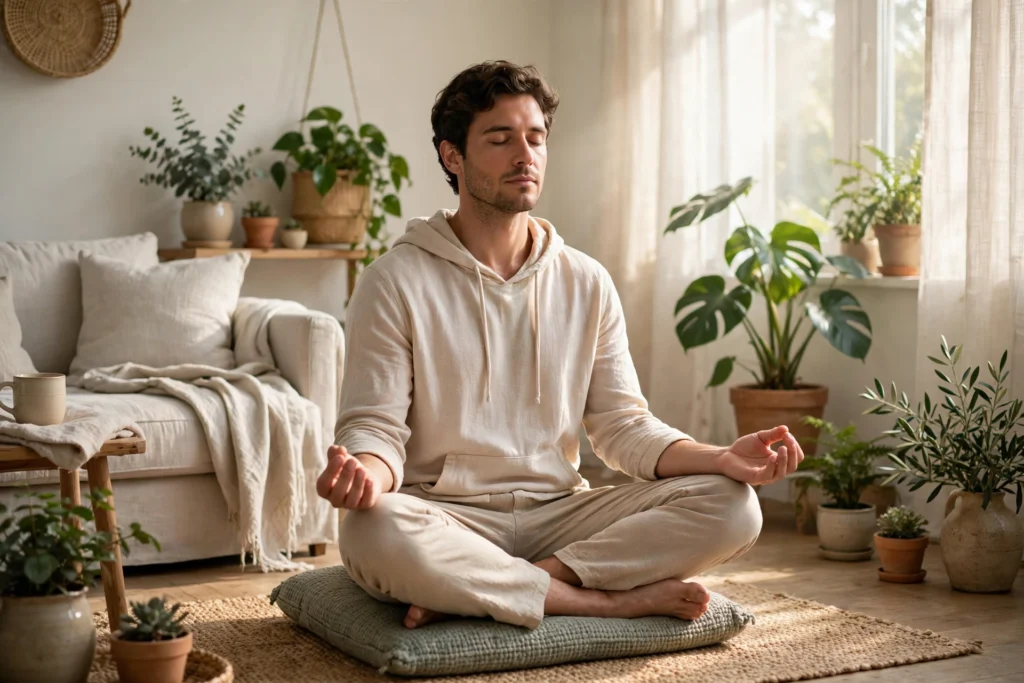

If your mind feels like a browser with forty tabs open, you are not alone. Stress, poor sleep and a short attention span have become normal for millions of people, and meditation is one of the few habits that actually helps without costing much or taking hours out of your day. The hard part is starting, and that is exactly where a good app earns its place.
The best meditation apps in 2026 do more than play a calm voice over soft music. They teach you how to breathe properly, help you fall asleep faster, give you short sessions that fit into a lunch break, and track your streak so you keep coming back. Some are built for total beginners, others for people who already meditate and want deeper practice.
We spent time with eight of the most popular options, looking at what each one does well, what it charges, and who it suits. Every app below offers a free tier or a free trial, so you can try before you pay anything. Pick one, give it a week, and see how your evenings feel.
1. Headspace
Headspace is the app most people think of first, and there is a reason for that. It has been around since 2010, and its friendly animations and clear, gentle voice make meditation feel less strange for someone who has never tried it. The beginner course, Basics, walks you through ten short sessions that explain what meditation actually is instead of throwing you straight into silence.
The library covers sleep, stress, focus, anxiety and even mindful eating, with sessions that run from three minutes to half an hour. Sleepcasts, which are slow bedtime stories mixed with ambient sound, are a genuine highlight, and plenty of users say they fall asleep before the story ends. There are also short movement sessions and breathing exercises for moments when sitting still feels impossible.
Headspace runs on a subscription after a free trial, with monthly and yearly plans, and students often get a discount. It is the safest pick if you want one app that does everything reasonably well and never feels intimidating. The downside is that the free content is limited, so you will need the paid plan to get the full library.
2. Calm
Calm leans harder into sleep and relaxation than any other app on this list. Its Sleep Stories are read by well-known voices, including actors and narrators with famously soothing tones, and the soundscapes cover rain, ocean waves, crackling fireplaces and quiet forests. If falling asleep is your main problem, Calm is probably the first app you should try.
It also has daily guided meditations, breathing tools, gentle stretches and music made specifically for focus. The Daily Calm session changes every morning and takes about ten minutes, which makes it easy to build into a routine. A mood check-in feature lets you log how you feel and get a session matched to it.
Calm offers a free version with a small set of sessions, and the full version is a yearly subscription. It costs more than some rivals, but the sleep content alone justifies it for a lot of people. The interface is clean and calm itself, with soft colours and no clutter.
3. Insight Timer
Insight Timer is the best choice if you want a huge library without paying. It has more than 100,000 free guided meditations, talks and music tracks from thousands of teachers around the world, which dwarfs what any rival gives away for free. You can filter by length, topic, teacher or background sound, so finding a five-minute session for anxiety is quick.
The app also has a simple meditation timer with bells and ambient sounds for people who prefer to sit in silence, plus courses on sleep, stress and relationships. A community feature shows how many people are meditating at the same time as you, which sounds gimmicky but genuinely helps some people stick with it.
A paid membership adds full courses and offline listening, but the free version is so generous that many users never pay a cent. The trade-off is choice overload: with so many teachers and sessions, quality varies, and it can take a while to find voices you like.
4. Ten Percent Happier
Ten Percent Happier started as a book by news anchor Dan Harris, who had a panic attack live on television and turned to meditation with deep scepticism. That sceptical, no-nonsense tone runs through the whole app, which makes it the best pick for people who roll their eyes at spiritual language and want straight talk.
The app focuses on short, practical courses taught by respected teachers, covering stress, focus, sleep and relationships. Sessions are usually ten minutes or less, and the app explains the science behind each technique in plain English. There is also a library of talks and live coaching sessions for paying members.
A free trial lets you try the full app before subscribing. Ten Percent Happier costs more than some rivals, and its library is smaller than Headspace or Calm, but if you want meditation without the mysticism, nothing else on this list speaks to you quite like it does.
5. Balance
Balance takes a different approach from every other app here: it builds a personal plan for you. When you first open it, you answer questions about your goals, your experience and how much time you have, and the app creates a daily programme that adapts as you go. It feels less like a library and more like a coach who knows where you are.
The sessions cover breathing, sleep, focus and stress, and the app uses your feedback after each session to adjust the next one. It won Apple’s App of the Year award, and the design is genuinely beautiful, with smooth animations and a calm, modern look that makes opening the app a small pleasure in itself.
Balance offers a free first year for new users, which is one of the most generous deals in this space, and after that it moves to a yearly subscription. If you like structure and want an app that tells you what to do each day instead of asking you to choose, Balance is hard to beat.
6. Waking Up
Waking Up, made by neuroscientist and author Sam Harris, is the deepest app on this list. It is built for people who want to understand the mind, not just relax for ten minutes. The introductory course runs for fifty days and mixes guided meditation with short lessons on consciousness, attention and the nature of thought.
Beyond the course, there are daily meditations, talks with philosophers and scientists, and a theory section that goes far beyond what other apps attempt. The production is quiet and spare, with no background music and no celebrity voices, which suits people who find other apps too polished or distracting.
The subscription is priced at the higher end, but the app offers free access to anyone who genuinely cannot afford it, no questions asked, which says a lot about its intent. Beginners can absolutely start here, but it rewards patience more than quick results.
7. Medito
Medito is a completely free meditation app, built by a non-profit, with no subscription, no ads and no locked content. That alone makes it worth a look. It offers guided sessions for beginners, sleep stories, breathing exercises and a thirty-day challenge that helps new meditators build a habit one small step at a time.
The app is simple and honest. There are no celebrity narrators and no fancy graphics, but the guidance is solid, the sessions are well structured, and the sleep content is surprisingly good for a free app. It also has courses on managing stress, dealing with difficult emotions and staying present during daily tasks like walking or eating.
Medito runs on donations, so the library grows more slowly than its paid rivals, and you will not find the huge catalogues of Calm or Insight Timer here. But if money is tight or you simply refuse to pay for an app, Medito gives you a real, complete meditation practice for nothing.
8. Aura
Aura mixes meditation with sleep stories, life coaching and mood tracking, and it personalises what it shows you based on how you feel each day. When you open it, you pick your mood, and the app suggests a short session, a story or a piece of music to match. It is a good fit for people whose needs change from day to day.
The library has thousands of tracks from coaches and therapists, covering anxiety, sleep, focus, confidence and relationships. Sessions are usually short, three to ten minutes, which suits busy schedules. There is also a sleep section with stories and soundscapes, plus a gratitude journal built into the app.
Aura has a free tier with a rotating selection of content, and the full library needs a subscription. The personalisation is genuinely useful, though the interface can feel busy compared with the calmer design of Headspace or Balance.
Best Meditation Apps Compared
Choosing between eight good apps is easier when you see them side by side. The table below sums up the key differences so you can shortlist two or three and try them yourself.
| App | Best For | Free Option | Standout Feature |
|---|---|---|---|
| Headspace | Beginners | Free trial | Sleepcasts and Basics course |
| Calm | Sleep | Limited free version | Sleep Stories and soundscapes |
| Insight Timer | Free content | 100,000+ free sessions | Huge teacher library |
| Ten Percent Happier | Sceptics | Free trial | Plain-English science |
| Balance | Personal plans | Free first year | Adaptive daily programme |
| Waking Up | Deep practice | Free if you cannot pay | 50-day introductory course |
| Medito | Zero budget | Completely free | No ads or paywall at all |
| Aura | Mood-based sessions | Limited free tier | Daily mood personalisation |
Price matters less than fit. An app you open every day beats a fancier one you ignore, so try the free tier first and notice which voice and style you actually enjoy. Most people settle on one app within a week or two, and that is the one worth paying for.
One more thing worth trying is the reminder feature most of these apps include. A gentle nudge at the same time each day, perhaps after your morning coffee or just before bed, turns meditation from a good intention into a habit. Pair the session with something you already do, like brushing your teeth or waiting for the kettle, and the routine sticks far more easily. If you miss a day, do not beat yourself up about it. Streaks are motivating, but a missed day is not a failure, and the research is clear that the benefits come from returning to the practice, not from a perfect record.

How to Pick the Right App for You
Start with your main goal. If sleep is the problem, Calm or Headspace will serve you best, because their bedtime content is the strongest. If you want to lower stress during the day, Balance or Ten Percent Happier give you short, practical sessions that fit between meetings. If money is the deciding factor, Insight Timer and Medito give you more free content than you will ever finish.
Think about how much time you really have. Some apps push twenty-minute sessions, while others are built around three-minute ones. Be honest with yourself: a three-minute session you do every day beats a twenty-minute session you skip. Most apps let you filter by length, so check that before you commit.
Voice matters more than people expect. A narrator you find irritating will kill the habit in days, while a voice you like will bring you back. Listen to a few samples in each app before you pay. And if you want to stay sharp while you build new habits, our guide to the Best Productivity Apps (10 Apps to Get More Done in 2026) pairs well with a morning meditation routine.
Common Mistakes Beginners Make
The biggest mistake is expecting instant calm. Meditation is a skill, and the first few sessions often feel awkward, boring or restless. That is normal. Research from Harvard has linked regular meditation with lower stress and better attention, but the benefits build over weeks, not hours, so give it at least two weeks before you judge it.
Another mistake is picking sessions that are too long. Ten minutes is plenty when you start, and three minutes counts. Sitting for half an hour on day one usually ends in frustration and a deleted app. Short and regular beats long and rare, every single time.
People also try to empty their mind completely, which is not the goal. Thoughts will come, and the practice is noticing them and gently coming back to your breath. If you catch yourself planning dinner mid-session, that is not failure, that is the exercise working. Students juggling study and stress can also look at the Best AI Tools for Students (Study Smarter, Not Harder in 2026) for help with the workload side of things.

FAQ
Are meditation apps actually effective?
Yes, for most people, when used regularly. Studies have linked daily meditation with lower stress, better sleep and improved focus. The app itself does not do the work, though. Short daily sessions over several weeks produce far better results than one long session now and then.
Can I learn meditation for free?
Yes. Insight Timer and Medito both offer large free libraries with no payment needed, and most paid apps give you a free trial of a week or more. Start free, find a style you like, and only pay when you know the app is worth it to you.
How long should I meditate each day?
Three to ten minutes a day is enough to start. Many teachers suggest ten minutes as a sweet spot, but consistency matters more than length. Once ten minutes feels easy, you can stretch to fifteen or twenty if you want deeper practice.
Which meditation app is best for sleep?
Calm is the strongest choice for sleep, thanks to its Sleep Stories and soundscapes. Headspace runs close behind with its Sleepcasts. Both let you set a sleep timer so the audio stops by itself, which is handy if you drift off mid-story.
Do I need a paid subscription to meditate?
No. Free apps like Medito cover the basics well, and Insight Timer’s free library is enormous. A subscription adds convenience, offline listening and full courses, but the core skill of sitting quietly and breathing can be learned without spending anything. If you enjoy tracking habits and routines, the Best Note Taking Apps (9 Apps to Organise Your Ideas in 2026) can help you keep a simple meditation journal too.
Conclusion
The best meditation app is the one you will actually open tomorrow morning. Headspace is the easiest all-rounder, Calm wins for sleep, Insight Timer and Medito are the best free options, and Balance is the smartest pick if you want a plan made for you. Try two or three free tiers this week, notice which voice and style you enjoy, and then commit to one for a month. Ten minutes a day is a small price for a calmer mind, better sleep and a little more patience with the people around you.