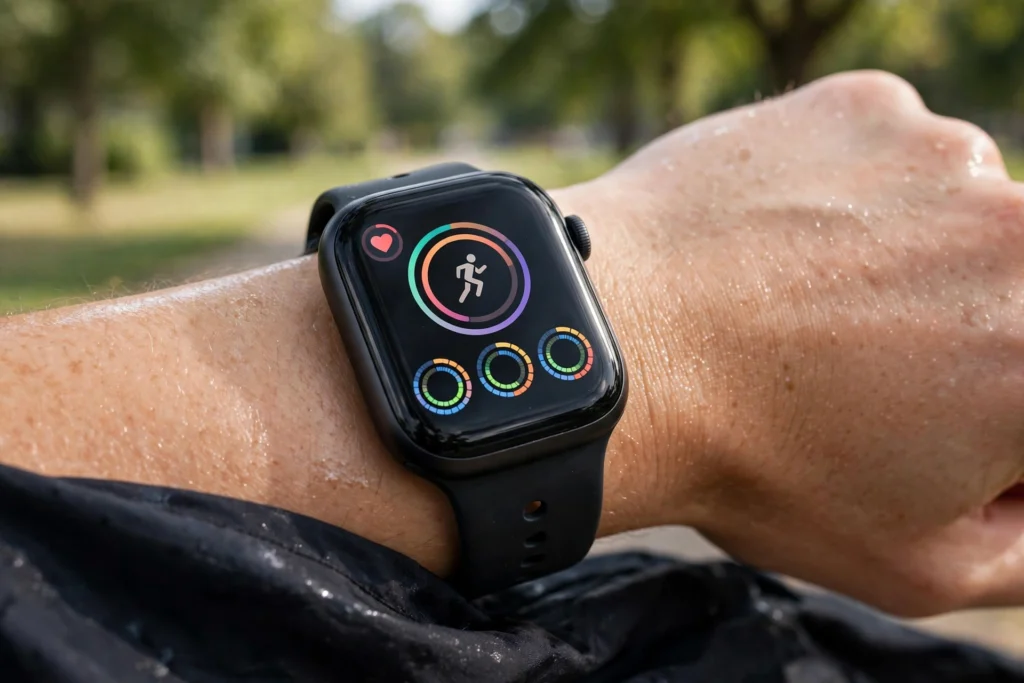

A good smartwatch has quietly become two gadgets in one: a fitness coach that lives on your wrist and a phone you can glance at without digging into your pocket. The best smartwatches in 2026 track your runs, your sleep, and your heart, take your calls, pay for your coffee, and last long enough that charging them is not a daily chore. The hard part is choosing, because the right watch depends almost entirely on your phone and your habits.
This list covers all of it. There are premium picks for iPhone and Android owners, a Garmin for serious athletes, a long-battery champion for people who hate charging, and two budget watches that cover the basics for a fraction of the price. Every watch here was picked for things that matter in daily use: a screen you can read in sunlight, tracking you can trust, and a battery that survives a weekend.
Before you buy, check one thing first: the watch has to match your phone. An Apple Watch with an Android phone, or a Galaxy Watch with an iPhone, loses most of its best features. Get the pairing right and everything else falls into place.
1. Apple Watch Series 10
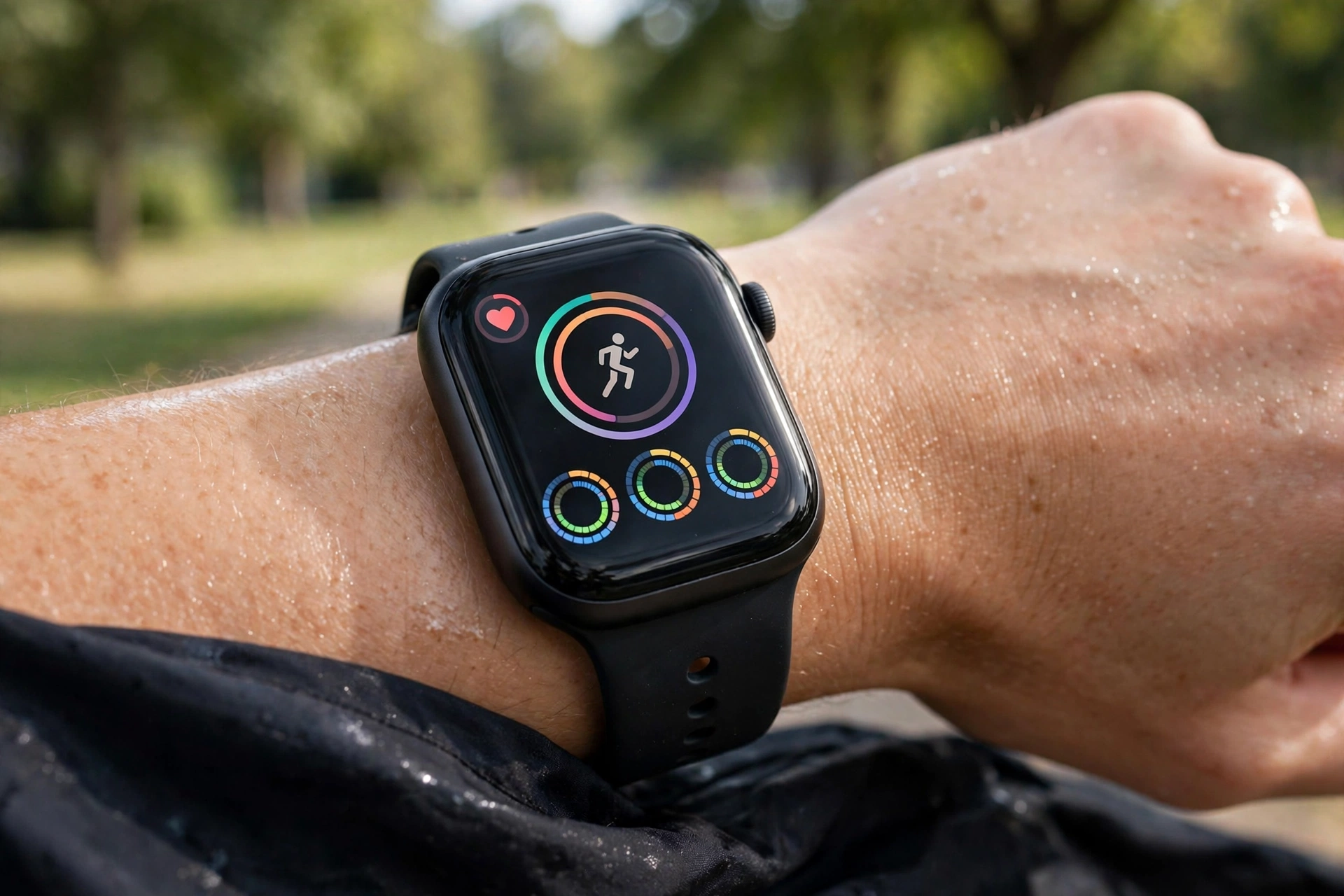
The Apple Watch Series 10 is the best smartwatch for iPhone owners, and it is not close. The screen is bigger and brighter than before, the case is thinner, and it charges to 80 percent in about half an hour. Health tracking covers heart rate, blood oxygen, sleep, and ECG, and the new sleep apnoea alerts flag breathing disturbances that are worth showing a doctor.
What makes it feel special is how smoothly it works with the iPhone: messages, calls, maps, and payments all arrive on your wrist instantly, and Siri handles quick jobs hands-free. Fitness tracking is strong for runners, swimmers, and gym-goers, with automatic workout detection that actually notices when you start moving. Battery lasts around 18 hours of normal use, or up to 36 hours in low-power mode — the weakest battery on this list, but fine if you charge it while you shower. If you own an iPhone and want the best all-round watch, this is it.
2. Samsung Galaxy Watch 7
The Galaxy Watch 7 is the Android answer to the Apple Watch, and the best pick for Samsung phone owners. It runs Wear OS with Google apps built in — Maps, Wallet, Assistant — and adds Samsung’s own health tools, including an energy score that sums up your sleep, activity, and recovery each morning, and an advanced sleep coach that suggests real changes.
The bright AMOLED screen is easy to read outdoors, and the watch feels light enough to wear all day and all night. Battery runs around 30 to 40 hours depending on how much you use it, which is enough for two days with sleep tracking included. The watch is water resistant to 5ATM, so swimming is fine. A few features, like ECG and blood pressure, need a Samsung phone to work fully, which is the usual Samsung catch. For most Android users, though, this is the watch to beat.
3. Garmin Forerunner 265
The Garmin Forerunner 265 is the watch for people who train seriously. Its GPS is fast and accurate, its running metrics go far beyond step counts — cadence, ground contact time, training load, recovery time — and the bright AMOLED screen is readable in full sun. It tells you when to push and when to rest, which is the difference between training and just exercising.
Battery life is the headline: around 13 days in smartwatch mode, and about 20 hours with GPS running. That means a week of training without a charger in sight. It also tracks sleep, heart-rate variability, and stress, and its morning report sums up how ready you are to train. Smart features are simpler than Apple’s — you get notifications and payments, but no app store full of extras. If running, cycling, or triathlon is your main sport, nothing else on this list tracks it as well.
4. Google Pixel Watch 3
The Pixel Watch 3 is Google’s best watch yet, and the one to buy if you use a Pixel phone. It comes in two sizes at last, so it fits smaller and larger wrists properly, and the screen is bright and smooth. Fitbit’s health platform powers the tracking, with detailed sleep stages, readiness scores, and workout detection that has been refined over years.
The watch feels polished in daily use: notifications are easy to act on, Google Wallet works everywhere, and the crown and button feel solid. Battery lasts around 24 hours with the always-on display, or up to 36 hours with battery saver — enough for a day plus a night of sleep tracking. It is not a Garmin for hardcore athletes, and it is not as deep as the Apple Watch ecosystem, but as an everyday Android watch it is a lovely thing to wear. The 45mm size suits bigger wrists and adds a little more battery.
5. Amazfit GTR 4
The Amazfit GTR 4 is the battery champion of this list. It lasts around two weeks on a charge, which changes how you use a watch — you stop thinking about charging entirely and just wear it. For the price, the tracking is impressive: dual-band GPS, heart rate, blood oxygen, stress, and more than 150 sport modes, all shown on a bright AMOLED screen.
The design looks far more expensive than it is, with a metal case and a classic round face that suits the office as well as the gym. Notifications, calls over Bluetooth, and Alexa are all included, though the app ecosystem is thin compared with Wear OS or watchOS. If your priority is a watch you charge twice a month that still tracks your runs properly, the GTR 4 is hard to argue with.
6. Apple Watch SE 2
The Apple Watch SE 2 gives you most of what makes the Apple Watch great for far less money. You get the same smooth watchOS experience, the same notifications, calls, and Apple Pay, and solid fitness and sleep tracking. The screen is a little dimmer and the case a little thicker than the Series 10, but on your wrist the difference is small.
What you give up is the always-on display, the ECG app, blood oxygen sensing, and the newest health sensors. For most people those are nice extras rather than essentials. Battery lasts around 18 hours, like its bigger sibling. If you want an Apple Watch for everyday use, workouts, and staying in touch — without paying flagship prices — the SE 2 is the smart buy, and it is often discounted.
7. Fitbit Charge 6
The Fitbit Charge 6 is not a full smartwatch, but for many people it is the better buy. It is a slim fitness band with a small colour screen, and it does the health basics brilliantly: steps, heart rate, sleep stages, and stress tracking, plus built-in GPS for runs without your phone. It is light, comfortable, and easy to forget you are wearing — which is exactly what a sleep tracker should be.
Battery lasts around a week, and it charges quickly. You get notifications and Google Wallet, but no app store and no speaker for calls. The Fitbit app remains one of the clearest health dashboards around, and the community challenges keep some people moving more than any spec sheet could. If you want health tracking first and smart features second, and you want it cheap, the Charge 6 is the pick.
8. Samsung Galaxy Watch FE
The Galaxy Watch FE is Samsung’s budget smartwatch, and it brings the full Wear OS experience down to a friendly price. You get Google Maps, Wallet, and Assistant, plus Samsung Health tracking for workouts, sleep, and heart rate, on a bright display that is easy to read. For a first smartwatch, it covers everything most people actually use.
Battery lasts around 30 hours, which covers a day and a night of sleep tracking. The case is a little smaller and the processor a little slower than the Watch 7, so heavy app users will notice a pause here and there, but for notifications, fitness, and payments it is smooth enough. It is often on sale, and at sale prices it is one of the best-value Android watches you can buy.
Quick Comparison
| Watch | Best for | Battery | Needs |
|---|---|---|---|
| Apple Watch Series 10 | iPhone owners | ~18 hours | iPhone |
| Galaxy Watch 7 | Samsung/Android | ~30–40 hours | Android |
| Garmin Forerunner 265 | Serious training | ~13 days | Any phone |
| Pixel Watch 3 | Pixel owners | ~24 hours | Android |
| Amazfit GTR 4 | Battery life | ~14 days | Any phone |
| Apple Watch SE 2 | Apple Watch on a budget | ~18 hours | iPhone |
| Fitbit Charge 6 | Health tracking, low price | ~7 days | Any phone |
| Galaxy Watch FE | Budget Android watch | ~30 hours | Android |
How to Choose a Smartwatch
Start with your phone, because it decides the shortlist. iPhone owners should look at the Apple Watch Series 10 or the SE 2. Samsung owners should look at the Galaxy Watch 7 or the FE. Pixel owners should look at the Pixel Watch 3. Everyone else — or anyone who trains hard — should look at Garmin or Amazfit, which work happily with any phone.
Then be honest about how you will use it. If you run marathons, GPS accuracy and battery matter more than apps, and the Garmin wins. If you want a watch that handles messages, calls, and payments all day, the Apple Watch or Galaxy Watch is the better fit. If you hate charging, the Amazfit GTR 4 or the Fitbit Charge 6 will make you happier than any flagship. And if you mainly want sleep tracking, pick something light and comfortable — a heavy watch you take off at night tells you nothing.
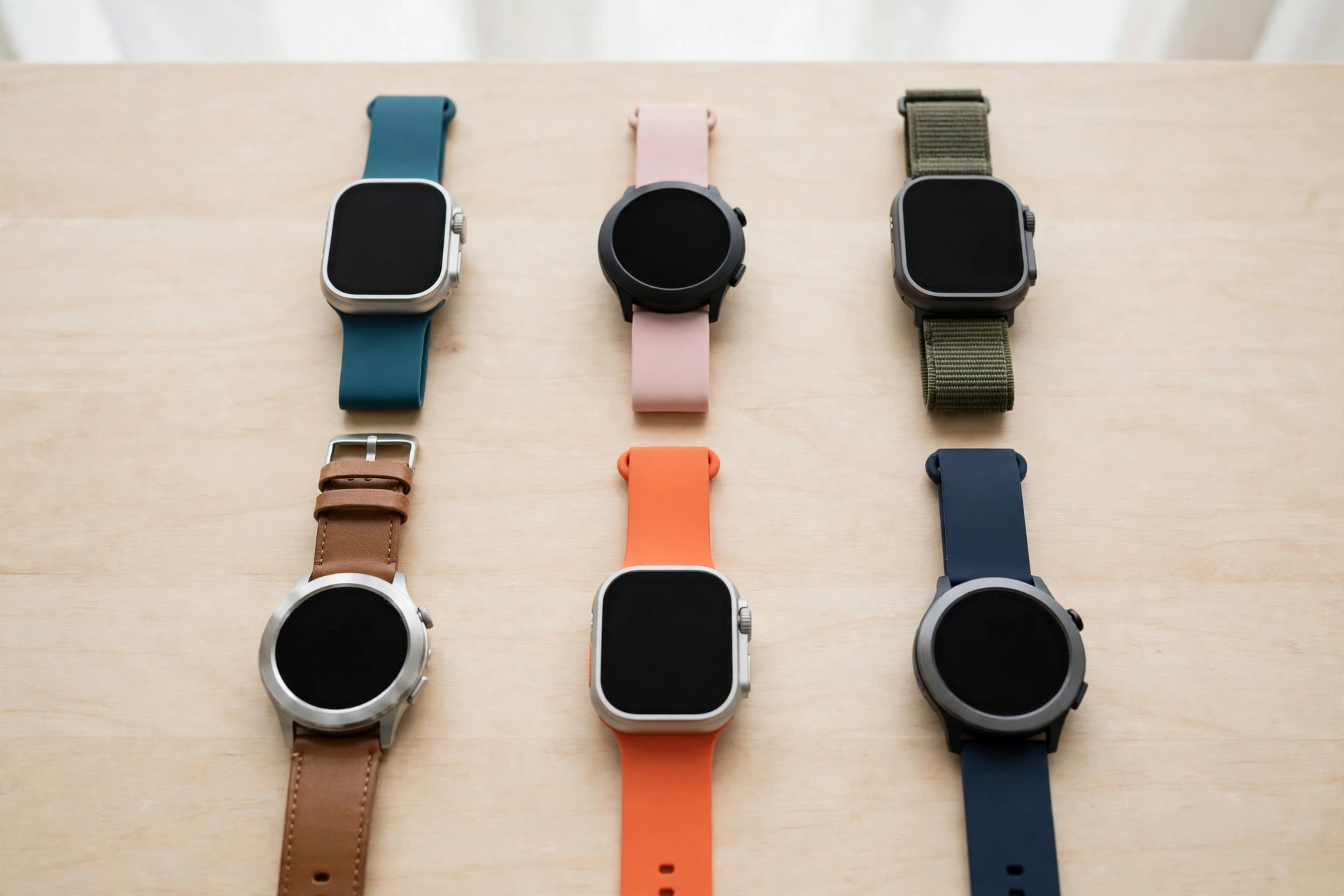
Screen and strap matter more than people expect. A bright AMOLED screen is easy to read in sunlight and looks better indoors, but it uses more battery than a dimmer screen. Try the watch on before you buy if you can: a watch that is too big slides around during workouts and gives shaky heart-rate readings, while a strap that irritates your skin will end up in a drawer. Most watches take standard straps, so you can swap a sporty silicone band for leather when you want to dress up. A spare strap costs little and changes how the watch feels completely — it is the cheapest upgrade you can buy for any watch on this list.
Finally, think about the health data you will actually use. A watch that records everything but shows you nothing useful is just a pedometer with extra steps. Look for clear trends — resting heart rate over weeks, sleep patterns, recovery scores — and a companion app that explains what the numbers mean. The best watch is the one whose data changes what you do, whether that is an earlier bedtime, a rest day after a hard session, or a walk instead of a third coffee. For phone tricks to pair with your new watch, see iPhone Hidden Features (18 Secret Tricks You Should Try) and Android Tips and Tricks (20 Useful Things Your Phone Can Do).
Getting the Most Out of Your Smartwatch
A smartwatch only earns its place if you actually use what it measures. Start with the two features that change behaviour fastest: the move reminders and the sleep tracking. Set a gentle stand reminder for every hour you sit at a desk, and wear the watch to bed for two weeks before you judge the sleep data — one bad night tells you nothing, but a fortnight shows whether you are consistently short on sleep or just had a rough week.
Customise the watch face to show what you check most: the time, the date, your next calendar event, and your step count cover most days. Turn off notifications from apps you do not need on your wrist — a watch that buzzes every minute is a distraction, not a tool. Most watches let you choose which apps can notify you, and spending ten minutes on that list pays off every day after.
Finally, use the health trends rather than the daily numbers. A single day’s heart rate or sleep score is noise; a month of data shows whether your resting heart rate is dropping as you get fitter, or whether late nights are catching up with you. Check the weekly summary in the companion app every Sunday, pick one small change for the week ahead, and let the watch do what it is best at — quietly keeping score while you get on with your life.
FAQ
Do I need a smartwatch that matches my phone brand?
For the best experience, yes. An Apple Watch needs an iPhone, and Galaxy and Pixel watches work best with Android phones. Garmin, Amazfit, and Fitbit work with both iPhone and Android, though some features still vary. Check the pairing before you buy.
How accurate is smartwatch health tracking?
Heart rate and step tracking are generally reliable for everyday use, and GPS on Garmin and Apple watches is very accurate. Sleep staging and blood oxygen are useful trends rather than medical measurements. If a watch flags something worrying, like an irregular heartbeat, show a doctor — do not rely on the watch alone.
Can I swim with a smartwatch?
Most watches on this list are rated 5ATM, which covers swimming in a pool or the sea. The Fitbit Charge 6 and Garmin Forerunner 265 are also swim-ready. Avoid hot tubs and saunas, and rinse the watch in fresh water after a sea swim to protect the seals.
How long does a smartwatch battery last?
It varies a lot. Apple and Pixel watches last about a day, Samsung watches about a day and a half, and Garmin and Amazfit watches last one to two weeks. Using GPS, the always-on display, or frequent calls shortens battery life on every watch.
Is a smartwatch worth it if I already have a phone?
For many people, yes. A watch puts notifications, calls, payments, and health tracking on your wrist, so you check your phone less and move more. If you mainly want fitness tracking, a cheaper band like the Fitbit Charge 6 gives you most of the benefit for far less money.
Conclusion
The best smartwatches in 2026 are easy to pick once you match the watch to your phone. iPhone owners should buy the Apple Watch Series 10 or save money with the SE 2, Android owners should look at the Galaxy Watch 7 or Pixel Watch 3, serious athletes should choose the Garmin Forerunner 265, and anyone who hates charging should try the Amazfit GTR 4. Buy the watch that fits your real habits, not the one with the longest spec sheet, and wear it for a month before you judge it — the health trends only make sense over time. To complete your setup, read Best Budget Smartphones (Great Phones That Don’t Cost Much in 2026).
Sources: Smartwatch — Wikipedia, Garmin Forerunner 265 — official page