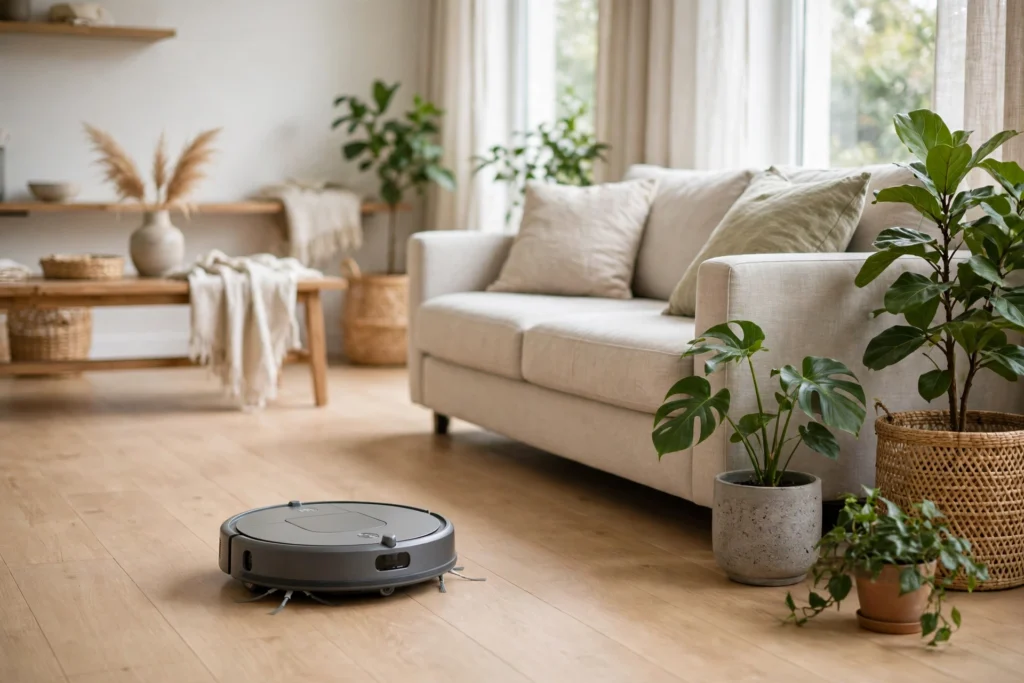

There is a particular pleasure in coming home to clean floors you didn’t clean. A robot vacuum does the dull, daily work — the crumbs under the table, the dust along the skirting boards, the pet hair that appears no matter how often you sweep — while you get on with your life. You set a schedule, and it gets on with it.
Robot vacuums have come a long way from the clumsy discs that bumped into chair legs and fell down stairs. Today’s models map your home, avoid cables and pet messes, empty themselves, and mop your hard floors — some even wash their own mopping pads. The differences between them matter, though: suction power, navigation, battery life, and how much maintenance they demand from you.
This guide compares 7 robot vacuums worth buying in 2026, from affordable models that cover the basics to premium machines that barely need you at all. Prices below are approximate ranges, since these go on sale often — check the current price before you buy, and look for a good returns policy so you can test it in your own home.
How to Choose a Robot Vacuum
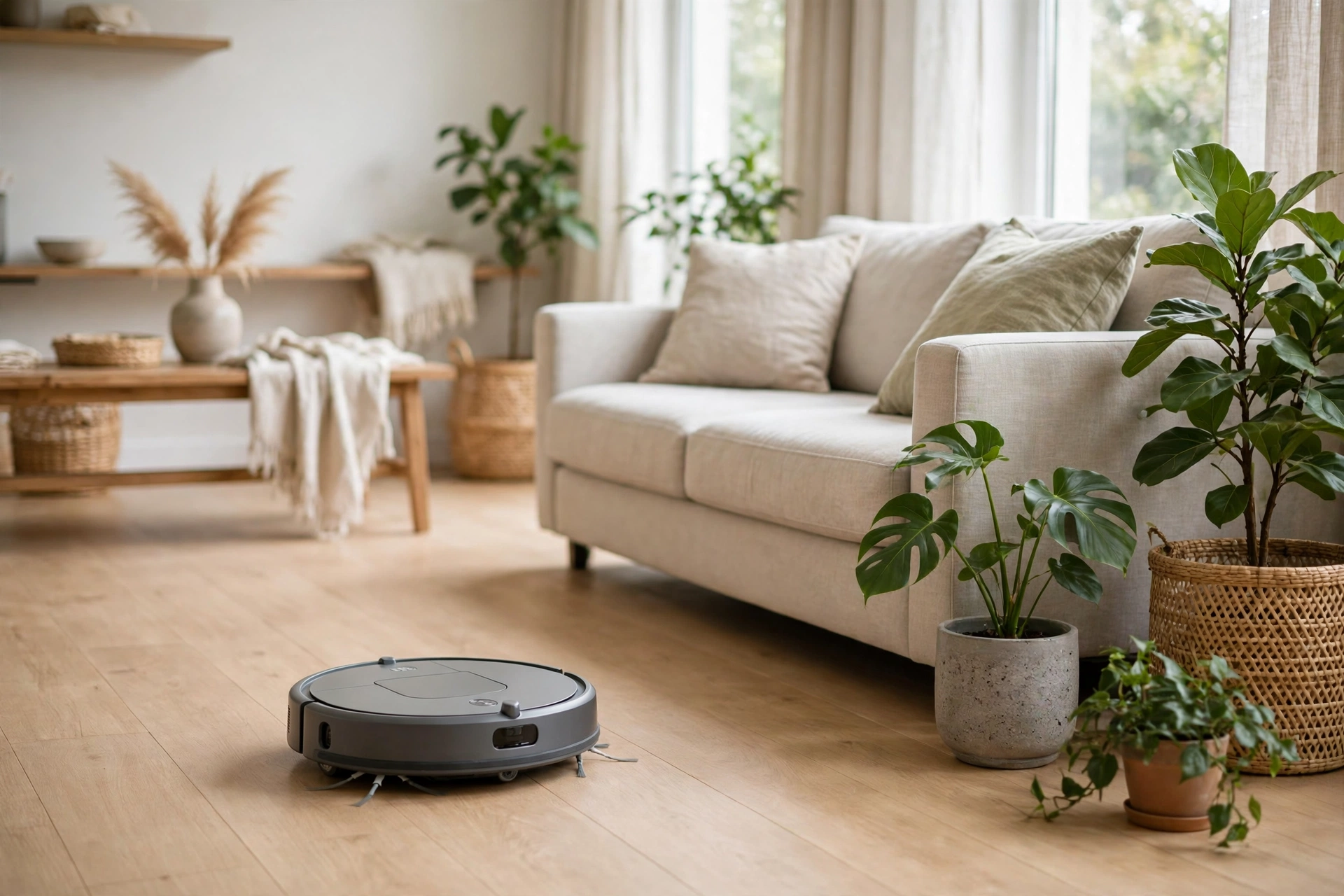
Start with your floors. If your home is mostly hard floors — wood, tile, laminate — almost any robot vacuum will do a good job, and a model with a mopping function is worth considering. If you have thick carpets, look for strong suction and a brush designed for carpet. Pet owners need strong suction, a brush that resists tangled hair, and a dustbin that’s easy to empty.
Navigation matters more than most people realise. Cheaper models clean in random patterns, bumping around until they’ve covered the area. Mid-range and premium models build a map of your home with lasers or cameras, clean in neat rows, and let you tell them which rooms to clean and which to avoid. A mapped vacuum cleans faster, misses less, and doesn’t get stuck as often.
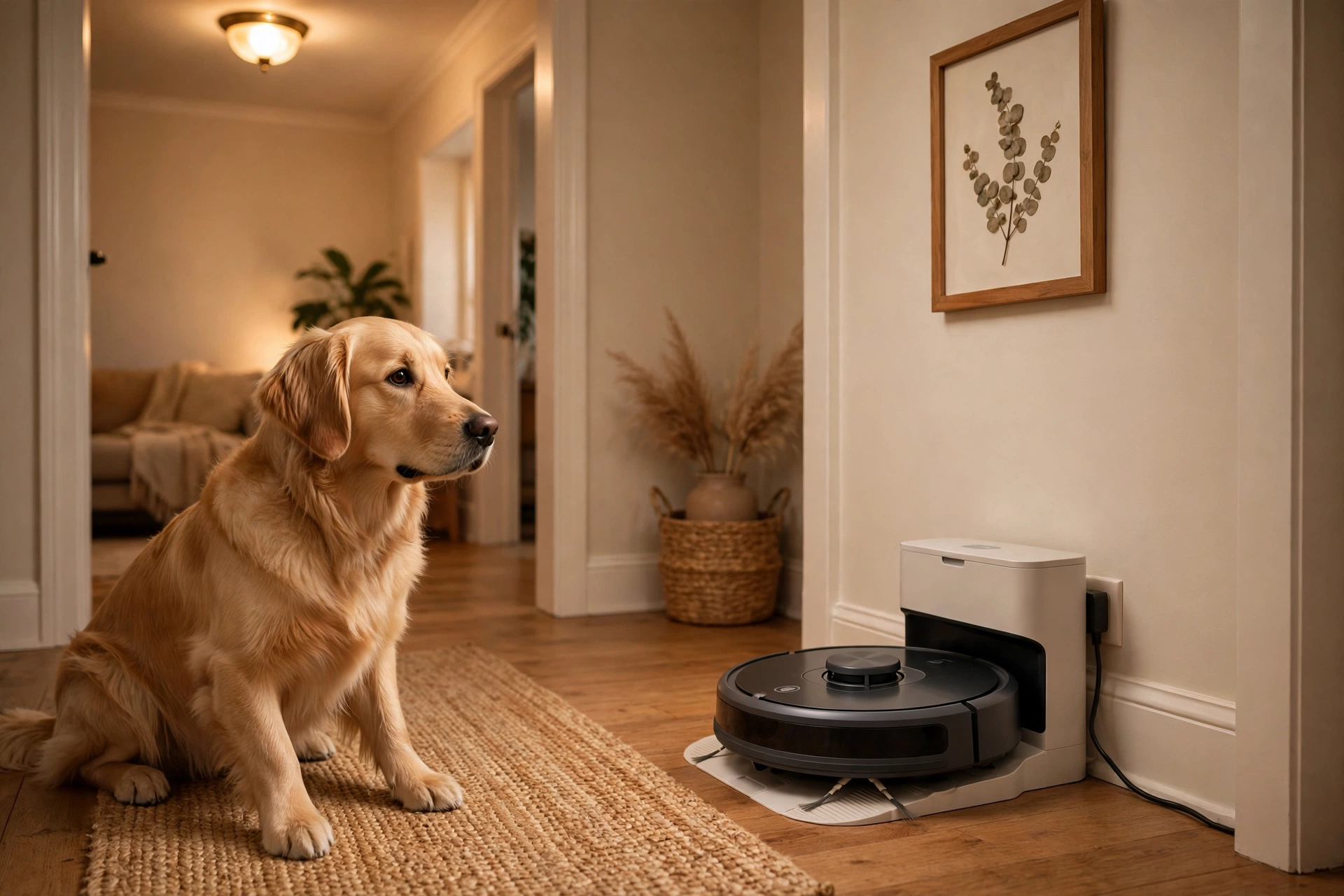
Finally, think about maintenance. A self-emptying dock means you only touch the vacuum every month or two instead of after every run. A mop that washes itself means you don’t have to rinse a dirty pad by hand. These features cost more, but they decide whether the vacuum actually saves you time or just gives you a different chore. For a beginner-friendly overview of the smart home these vacuums belong to, see our Smart Home Technology for Beginners (What It Is and Where to Start).
1. Roborock S8 Pro Ultra — Best Overall Robot Vacuum
The Roborock S8 Pro Ultra is the robot vacuum to beat in 2026, and it earns that title by doing almost everything itself. It vacuums with strong suction, mops with a vibrating pad, and returns to a dock that empties the dustbin, washes the mop, refills the water tank, and dries the pad with warm air. You barely touch it for weeks at a time.
Navigation is excellent: laser mapping builds an accurate floor plan, the vacuum cleans in neat rows, and it avoids obstacles — cables, shoes, pet bowls — with a camera and 3D sensors. The app lets you set room-by-room schedules, no-go zones, and cleaning routines, and it works with Alexa, Google Assistant, and Siri.
Pricing usually sits around $1,200–$1,600, which is a lot for a vacuum — but it’s the price of the full package: vacuum, mop, and a dock that handles the dirty work. If you want the best robot vacuum available and you’re willing to pay for it, this is the one. Watch for sales, when it often drops by a few hundred dollars.
2. iRobot Roomba Combo j9+ — Best for Pet Owners
iRobot has been making robot vacuums longer than anyone, and the Combo j9+ shows that experience. It’s a vacuum and mop in one, with a mop pad that lifts itself onto the top of the robot when it reaches carpet, so it never drags a wet pad across your rug. For pet owners, that’s a genuinely useful trick.
The j9+ uses a camera to spot and avoid pet waste — iRobot is so confident about this that it offers a guarantee against it, a promise no other maker matches. Suction is strong, the dual rubber brushes resist tangled hair better than bristle brushes, and the self-emptying dock holds around 60 days of dirt before you need to change the bag.
Pricing is usually around $900–$1,400. The app is polished, the mapping is accurate, and the brand has a long record of supporting older models with updates. If you have pets, this is the safest pick on the list.
3. Ecovacs Deebot X2 Omni — Best for Mopping
If your home is mostly hard floors, the Deebot X2 Omni is the best mopping robot you can buy. It uses rotating mop pads that press down on the floor, scrubs properly instead of dragging a damp cloth, and returns to a dock that washes the pads, empties the dustbin, and refills the water — all automatically.
The square design is unusual, but it helps the vacuum reach into corners that round robots miss. Suction is among the strongest on this list, navigation uses laser mapping, and the app offers detailed control over rooms, zones, and cleaning routines. It also works as a home security camera of sorts, with a camera you can use to check on your home remotely.
Pricing usually sits around $1,000–$1,500. It’s a premium machine at a premium price, but for a home with large areas of hard flooring, the mopping quality justifies it. If your floors are mostly carpet, look at the Roomba or Roborock instead.
4. Shark AI Ultra — Best Value Self-Emptying Vacuum
Shark’s AI Ultra brings self-emptying to a much lower price than the premium models — usually around $400–$600. The dock empties the dustbin into a bagless base that holds around 60 days of dirt, so you get the main convenience of the expensive machines without the expensive price.
Navigation uses laser mapping, and the app lets you set rooms, schedules, and no-go zones. Suction is strong for the price, and the self-cleaning brush roll resists hair tangles reasonably well. It’s a vacuum-only model — no mopping — which keeps the price down and the maintenance simple.
The trade-offs are a louder operation than the premium models and an app that isn’t quite as polished. But for the price, it’s the best value self-emptying vacuum on this list, and a great first robot vacuum for someone who wants the convenience without the four-figure cost.
5. Eufy RoboVac X8 Hybrid — Best Budget Robot Vacuum
The Eufy RoboVac X8 Hybrid is the cheapest genuinely good robot vacuum on this list, usually priced around $300–$450. It vacuums and mops, maps your home with lasers, and uses twin turbines for strong suction — a lot of machine for the money.
It doesn’t empty itself, and the mopping is basic — a damp pad dragged behind the vacuum, not a scrubbing system — so you’ll be emptying the dustbin after each run and filling the water tank yourself. But the cleaning quality is solid, the app is straightforward, and the price is low enough that it pays for itself in saved sweeping time within weeks.
This is the pick for a smaller home or flat, for someone buying their first robot vacuum, or for anyone who wants to try the idea without a big commitment. If you like it, you can upgrade later — and you’ll know exactly which features are worth paying for. For more on the connected devices these vacuums work alongside, see our Internet of Things Examples (12 Smart Devices Already Around You).
6. Dreame L20 Ultra — Best for Large Homes
The Dreame L20 Ultra is built for bigger spaces. It has a large battery that cleans for hours on a single charge, a dock that empties the dustbin and washes the mops, and a clever trick: its mop pads extend outwards to clean right up against skirting boards and into corners, where most robots leave a dirty edge.
Suction is very strong, navigation uses laser mapping with 3D obstacle avoidance, and the app offers the usual room controls and schedules. It handles the transition between hard floors and carpet well, lifting its mops when it reaches a rug so it doesn’t leave wet tracks behind.
Pricing is usually around $900–$1,200. It’s a lot of vacuum for a large home, and the edge-cleaning feature is genuinely useful if you have a lot of skirting boards and corners. For a smaller flat, it’s more machine than you need — the Eufy or the Shark would do the same job for less.
7. Samsung Jet Bot AI+ — Best for Samsung Households
Samsung’s Jet Bot AI+ is the pick if your home already runs on Samsung — a Samsung phone, a Samsung TV, SmartThings devices. It connects to the SmartThings app, works with Bixby and Alexa, and its camera can be used to check on your home or your pets while you’re out.
Cleaning performance is solid, with strong suction and laser navigation, and the self-emptying dock holds around two to three months of dust. The obstacle avoidance uses a 3D sensor and a camera, and it recognises common objects like cables and shoes. It’s a capable all-rounder rather than a specialist, and it fits neatly into a Samsung smart home.
Pricing is usually around $800–$1,100. It’s not the cheapest or the strongest on this list, but if you want one app for your TV, your phone, your lights, and your vacuum, the integration is worth it.
Best Robot Vacuum Cleaners in 2026 at a Glance
| Vacuum | Best For | Self-Emptying? | Mopping? | Approx. Price |
|---|---|---|---|---|
| Roborock S8 Pro Ultra | Best overall | Yes | Yes, vibrating pad | Around $1,200–$1,600 |
| iRobot Roomba Combo j9+ | Pet owners | Yes | Yes, lifting pad | Around $900–$1,400 |
| Ecovacs Deebot X2 Omni | Mopping | Yes | Yes, rotating pads | Around $1,000–$1,500 |
| Shark AI Ultra | Value self-emptying | Yes | No | Around $400–$600 |
| Eufy RoboVac X8 Hybrid | Budget | No | Yes, basic | Around $300–$450 |
| Dreame L20 Ultra | Large homes | Yes | Yes, extending pads | Around $900–$1,200 |
| Samsung Jet Bot AI+ | Samsung households | Yes | No | Around $800–$1,100 |
Tips for Getting the Most from Your Robot Vacuum
Prepare the floor before the first run. Pick up cables, socks, and small toys — even the best obstacle avoidance can be beaten by a phone charger. Tuck away anything the vacuum could drag around the house, and close doors to rooms you don’t want cleaned yet. After a few runs, you’ll learn what your vacuum can handle and what it can’t.
Run it often. A robot vacuum works best on a schedule — every day, or every other day — because it picks up dirt before it builds up, and each run is shorter and easier. Set it to clean while you’re out, or at night if the noise doesn’t bother you. A daily run keeps a pet-owning household dramatically cleaner than a weekly deep clean ever will.
Maintain it. Empty the dustbin, clean the brushes, and wash or replace the filter on the schedule in the manual. A clogged filter or a hair-wrapped brush cuts suction in half, and a dirty sensor makes the vacuum bump into things it should avoid. Five minutes of maintenance a week keeps it cleaning like new. And keep the dock somewhere with space around it — the vacuum needs a clear path to find its way home.
Watch the first few runs. A new robot vacuum is still learning your home, and the first week is when you’ll spot the trouble areas: a rug fringe it chews on, a cable it keeps finding, a threshold it struggles to cross. Fix those spots — tuck the cable, tape down the rug corner, add a small ramp for a high threshold — and the vacuum will handle the rest on its own. Most “my robot vacuum is useless” stories come from a home that was never tidied for it, not from a bad machine.
Finally, remember what the vacuum can’t do. It won’t clean stairs, it won’t dust shelves, and it won’t pick up a spill. That’s fine — it’s not supposed to. Its job is the daily floor work, and it does that job well. Pair it with a quick weekly once-over with a handheld vacuum for stairs and corners, and your home stays clean with a fraction of the effort it used to take. For a look at where home tech like this is heading, see our Technology Trends 2026 (10 Trends That Will Shape Everyday Life).
Frequently Asked Questions
Do robot vacuums work on carpets?
Yes, modern robot vacuums work well on low and medium-pile carpets, and the best models handle thicker carpet too. Suction matters most here — look for a model with strong suction and a brush designed for carpet. Very thick or shaggy rugs can still be a challenge, and no robot vacuum replaces a full-size upright for a deep clean.
Can a robot vacuum fall down the stairs?
Almost never. Every robot vacuum sold today has cliff sensors that detect drops and stop it from driving off an edge. The sensors can be confused by very dark carpets or stairs, which absorb the infrared light they use, so check your stairs on the first run. You can also set a no-go zone at the top of the stairs in the app for extra safety.
How long do robot vacuums last?
Most last 4 to 6 years with regular maintenance — cleaning the brushes, replacing the filter, and changing the battery when it starts to fade. Premium models tend to last longer, partly because the maker keeps supporting them with software updates. The battery is usually the first thing to wear out, and it’s replaceable on most models.
Do I still need a normal vacuum if I have a robot vacuum?
For most homes, a robot vacuum handles the daily cleaning, and a normal vacuum is only needed for occasional deep cleans — stairs, upholstery, car interiors, and corners the robot can’t reach. Many robot vacuum owners keep a small handheld or stick vacuum for those jobs and rarely use a full-size upright at all.
Are robot vacuums safe around pets?
Yes, and most pets get used to them within a few days. Some cats even ride on them. The main risk is the famous one: a robot vacuum running over pet waste and spreading it. Modern premium models use cameras to detect and avoid it, and iRobot offers a guarantee on the Roomba j9+. If you have pets, pick a model with obstacle avoidance and run it when you can check on it.
Conclusion
The best robot vacuum is the one that matches your home. The Roborock S8 Pro Ultra is the best all-rounder if you want the full package. The Roomba Combo j9+ is the pick for pet owners. The Deebot X2 Omni wins on mopping, the Shark AI Ultra on value, the Eufy X8 Hybrid on budget, the Dreame L20 Ultra on large homes, and the Samsung Jet Bot AI+ on Samsung households.
Whatever you choose, run it on a schedule, keep it maintained, and give it a clear floor to work with. A robot vacuum won’t replace every kind of cleaning, but it takes the daily chore off your list — and coming home to clean floors you didn’t clean is a small pleasure that never really gets old.